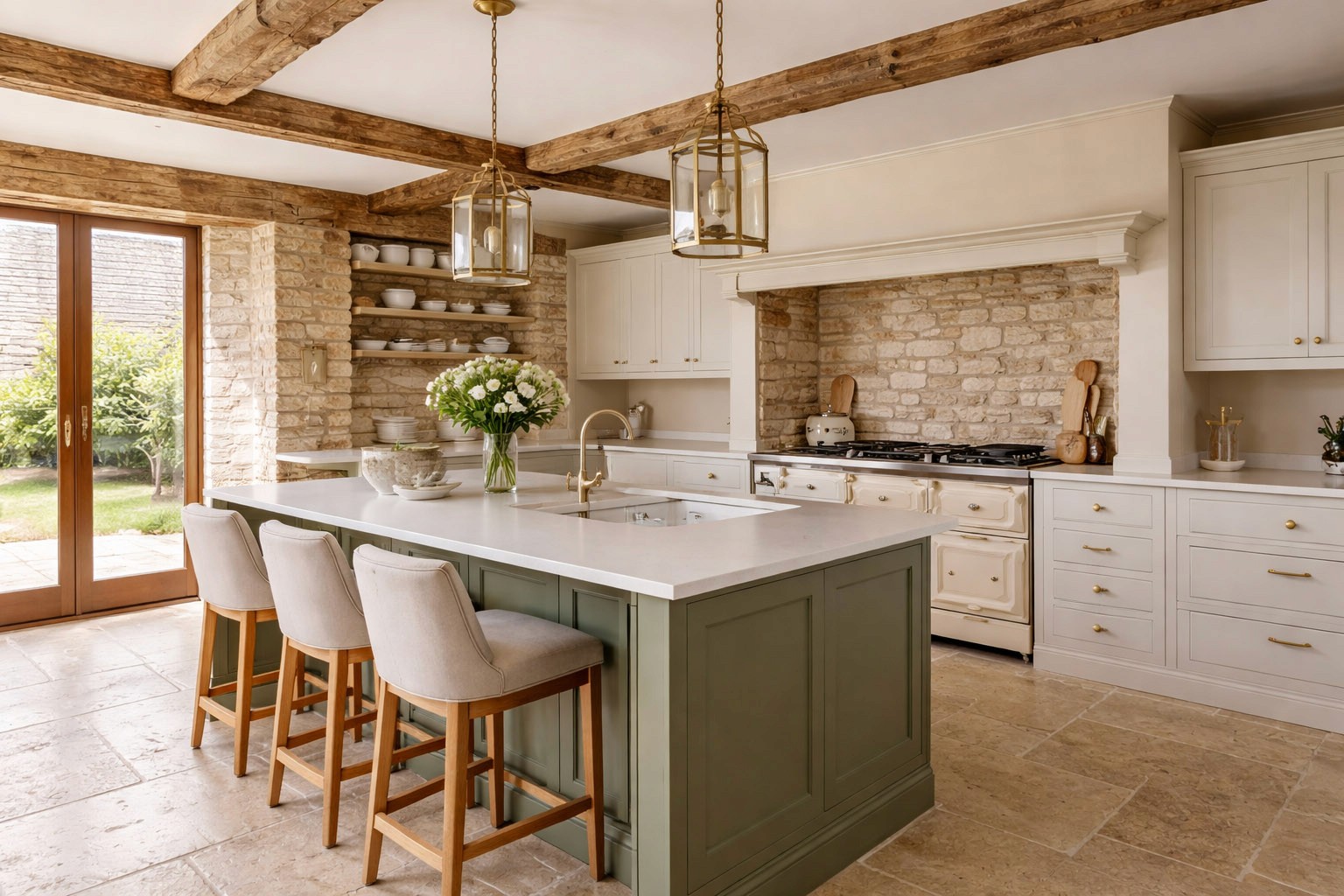
Designing a kitchen for a Cotswold stone property is very different from designing a kitchen in a modern new-build home. Period properties, cottages, farmhouses and barn conversions all come with their own character, proportions and architectural features, and the kitchen design should complement these rather than compete with them. A well-designed kitchen in a Cotswold property should feel like it belongs to the house. The best kitchens in period homes look as though they have always been there, even though they function perfectly for modern living.
Understanding the Property First
Before designing the kitchen itself, it’s important to understand the property. Many Cotswold homes have low ceilings, thick stone walls, uneven floors, small windows or unusual room layouts. These features are part of the charm, but they also influence the kitchen layout and furniture design.
In some properties, particularly cottages and listed buildings, you may be limited in how much structural work can be done. In others, such as barn conversions or extended farmhouses, you may have large open-plan spaces to work with. Every project is different, which is why careful planning and design is so important.
At Dajon Interiors, many kitchen projects begin with understanding how the house works, how the space is used, and how the kitchen can be designed to suit both the property and the homeowner’s lifestyle.
Choosing the Right Kitchen Style
Some kitchen styles work particularly well in Cotswold and period properties.
Shaker kitchens are one of the most popular choices because they are simple, timeless and suit both traditional and modern country homes. Painted timber doors, classic handles and natural materials work beautifully with stone walls, timber beams and older buildings.
In larger properties, a more contemporary kitchen can also work very well, especially when paired with natural materials such as timber, stone, quartz or granite. The key is to balance modern functionality with the character of the building.
Timeless design is usually better than following short-term trends, particularly in period homes where a kitchen should still look right in ten or fifteen years’ time. A professionally designed kitchen will always age better than one based purely on current trends.
Layout and Open Plan Living
Many homeowners in the Cotswolds choose to extend or reconfigure their homes to create open plan kitchen, dining and living spaces. This is particularly common in barn conversions, farmhouses and extended cottages.
When designing an open plan kitchen, it’s important to think about more than just where the units go. You should consider:
The flow between cooking, dining and seating areas
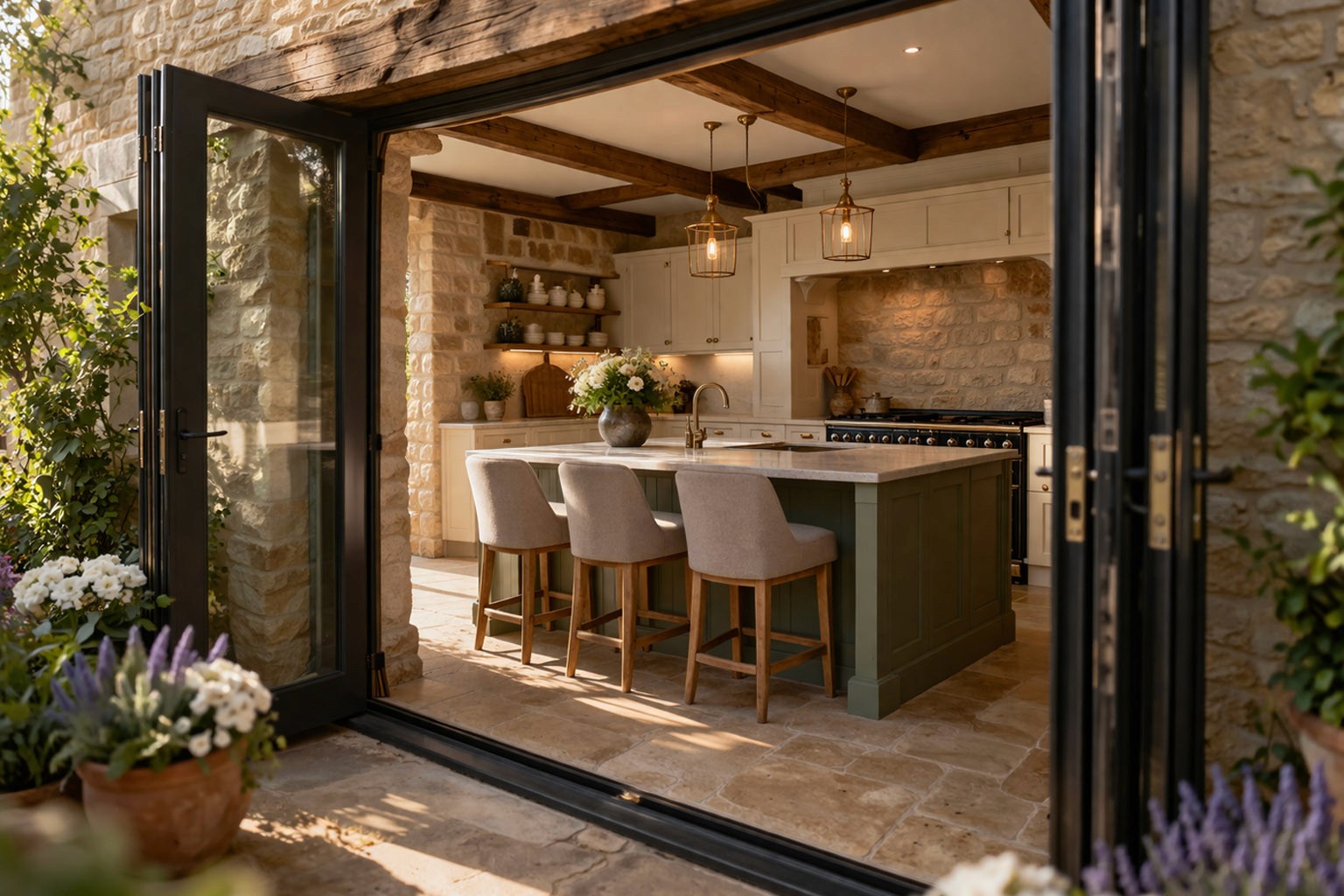
Views into the garden or countryside
Natural light and window positions
Kitchen islands and seating
Storage and utility rooms
Lighting for different areas
How the space will be used day to day
A well-designed layout is often more important than the actual kitchen style, and this is where working with a kitchen designer early in the project can make a big difference.
Storage and Practical Design
Storage is one of the most important parts of any kitchen design, particularly in family homes or large country properties where the kitchen is used heavily.
Good kitchen design should include a mix of storage options such as:
Deep drawers for pans and plates
Larder cupboards or pantry storage
Integrated bins and recycling
Spice drawers and internal organisers
Utility rooms or boot rooms
Appliance garages for kettles and toasters
Island storage
Many period properties benefit from bespoke storage because rooms are often not perfectly square and off-the-shelf kitchens don’t always make the best use of the space. Bespoke furniture allows every part of the room to be used properly while keeping the design in keeping with the property.
Materials That Work Well in Country Homes
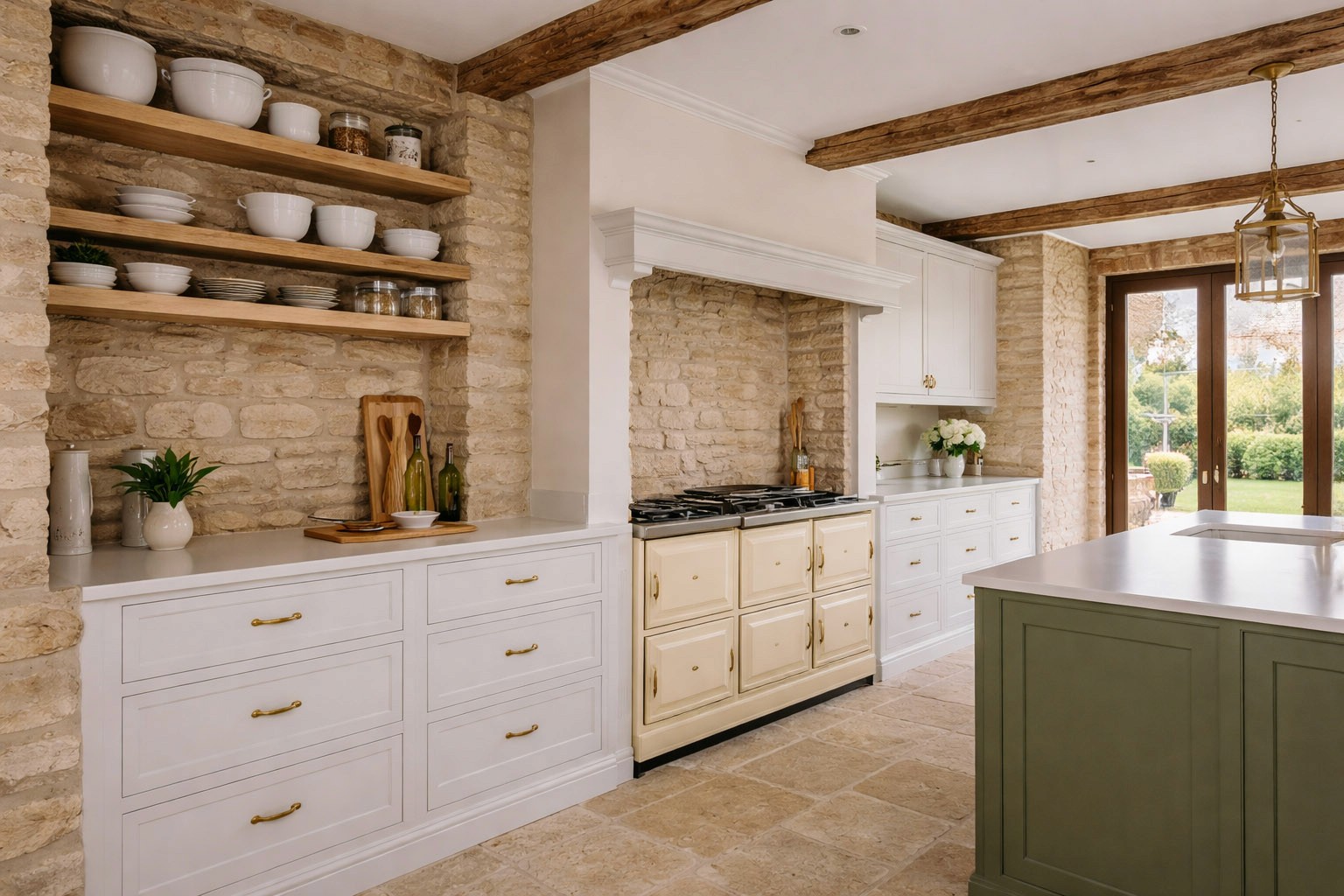
Materials play a big part in how a kitchen feels in a period property. Natural materials usually work best in Cotswold homes.
Popular choices include:
Quartz or granite worktops
Solid timber features
Stone or tiled floors
Painted timber doors
Brass, bronze or stainless steel handles
Belfast or undermount sinks
Freestanding-style cooker hoods
These materials tend to age well and suit both traditional and modern country interiors.
Lighting the Kitchen Properly
Lighting is often overlooked, but it makes a huge difference to how a kitchen feels, especially in older properties which may have smaller windows.
A good kitchen lighting plan should include:
Ceiling lighting
Under-cabinet lighting
Pendant lights over islands
Feature lighting
Task lighting for work areas
Soft lighting for evenings
Layered lighting helps make a kitchen feel warm and welcoming rather than overly bright or clinical.
Final Thoughts
Designing a kitchen for a Cotswold stone property is about balancing character and modern living. The best kitchens respect the age and style of the building while still providing all the storage, layout and functionality needed for modern life.
Careful planning, good layout design and quality materials make a huge difference to the finished result. Whether you are renovating a cottage, extending a farmhouse or converting a barn, a well-designed kitchen can completely transform how your home looks and feels.
If you are planning a kitchen project in Gloucestershire or the Cotswolds, speaking with a designer early in the process can help you explore layout ideas, storage solutions and materials that will suit both your home and your lifestyle. The team at Dajon Interiors regularly work with period properties, barn conversions and country homes, helping homeowners design kitchens that feel appropriate to the property while still working perfectly for modern living.